
A Review on New 3-D Printed Materials’ Geometries for Catalysis and Adsorption: Paradigms from Reforming Reactions and CO2 Capture
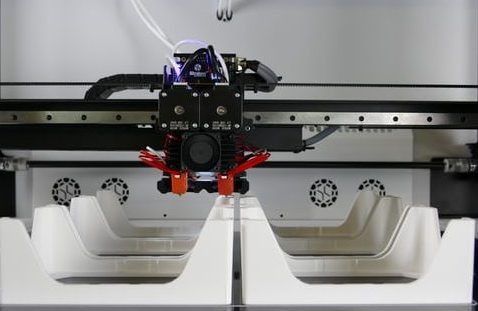
Abstract “Bottom-up” additive manufacturing (AM) is the technology whereby a digitally designed structure is built layer-by-layer, i.e., differently than by traditional manufacturing techniques based on subtractive manufacturing. AM, as exemplified by 3D printing, has gained significant importance for scientists, among others, in the fields of catalysis and separation. Undoubtedly, it constitutes an enabling pathway by
Publication by VinUniversity College Of Health Sciences’ Lecture in American Journal of Physiology

Abstract Hyperphosphatemia is the primary risk factor for vascular calcification, which is closely associated with cardiovascular morbidity and mortality. Recent evidence showed that oxidative stress by high inorganic phosphate (Pi) mediates calcific changes in vascular smooth muscle cells (VSMCs). However, intracellular signaling responsible for Pi-induced oxidative stress remains unclear. Here, we investigated molecular mechanisms of
Boron Nitride Nanotubes Versus Carbon Nanotubes: A Thermal Stability and Oxidation Behavior Study

Abstract Nanotubes made of boron nitride (BN) and carbon have attracted considerable attention within the literature due to their unique mechanical, electrical and thermal properties. In this work, BN and carbon nanotubes, exhibiting high purity (>99%) and similar surface areas (~200 m2/g), were systematically investigated for their thermal stability and oxidation behavior by combining thermal